
Triathlon training guide

Adaptive triathlon training: a plan that changes with your reality.

Adaptive triathlon training uses the athlete’s race goal, availability, training zones, completed sessions and recent changes to shape the next useful block of swimming, cycling, running, strength and recovery.

Definition

What does adaptive triathlon training mean?

A conventional training plan describes what an athlete should do on a sequence of future days. An adaptive plan also asks whether that sequence still makes sense when the next planning decision is made.

The difference matters in triathlon because one athlete is coordinating several sports, different intensity systems, recovery demands, equipment, pool access, work commitments and a fixed race date. A change in one part of the week can affect the quality and safety of another.

Working definition:

Adaptive triathlon training is a planning process that updates upcoming training from current athlete context while preserving the purpose of the larger race plan.

Adaptation is not simply moving every missed session to the next empty day. It means deciding what should remain, what should change, what should be shortened and what should be removed.

Planning models

Static plans and adaptive plans solve different problems.

Static plan

Defines the intended progression

A static plan is useful for establishing training phases, weekly structure, discipline balance and race preparation over time.

  • Simple to understand.
  • Predictable.
  • Useful when life and training follow the original assumptions.
Adaptive plan

Re-evaluates the next decisions

An adaptive plan uses new information to decide whether the immediate schedule still supports the same objective.

  • Responds to actual completion.
  • Accounts for changing availability.
  • Protects the purpose and recovery balance of the week.

A good system needs both. Without long-term direction, “adaptive” can become random. Without short-term adjustment, a structured plan can become detached from what the athlete actually did.

Athlete context

The inputs that should influence an adaptive training week.

01

Primary race and date

The race defines the direction, the time available and the relevance of build, recovery, specificity and taper decisions.

02

Weekly availability

A plan must fit the athlete’s real weekdays, long-session windows, preferred rest days and access to facilities.

03

Training zones and thresholds

Bike power, run pace or heart rate, and swim CSS help translate a session purpose into athlete-specific intensity.

04

Completed and missed training

The system should distinguish between what was planned, what was completed, what was modified and what was skipped.

05

Preferences and equipment

Pool access, indoor-bike availability, strength preferences and recording devices affect which sessions are practical.

06

Athlete edits and approvals

The athlete’s decision to move, shorten, reject or replace a session is itself useful context for later planning.

Missing data should not break the workflow.

A useful system should apply a clear fallback, identify uncertainty and avoid pretending to know a threshold, preference or race context that was never provided.

The adaptive loop

Adaptation should be a controlled planning cycle.

  1. Load current athlete context.
    Race, availability, zones, preferences, equipment and recent training establish the planning boundary.
  2. Generate the next useful block.
    The immediate output may be one week or two weeks rather than a rigid season-long calendar.
  3. Validate the structure.
    Dates, sports, workout blocks, durations, availability, rest conflicts, hard-session spacing and duplicate risk should be checked before saving.
  4. Let the athlete review the draft.
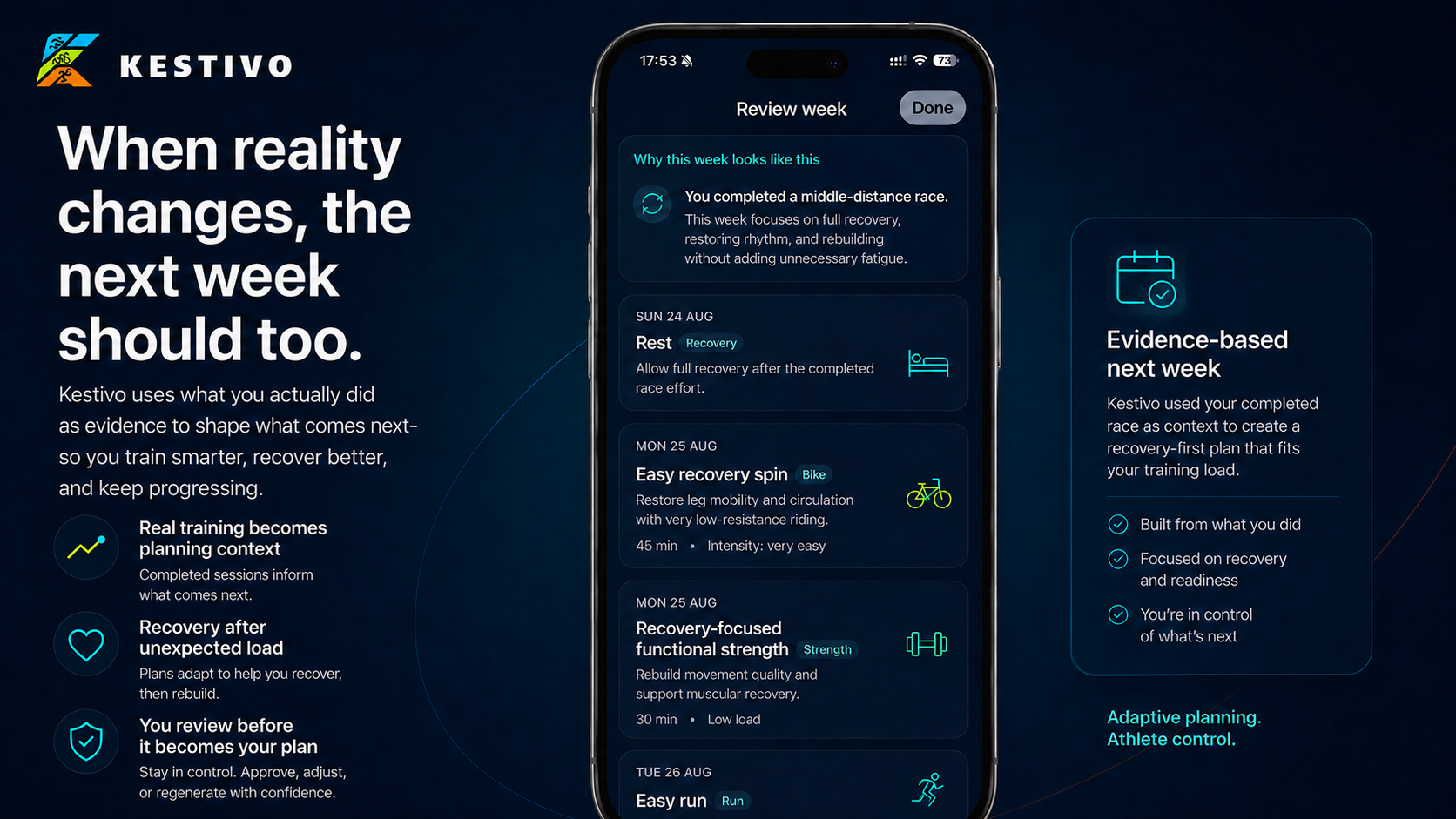
    The athlete should be able to edit, move, reject or replace sessions before committing them to the calendar.
  5. Record what actually happened.
    Completed, skipped and modified workouts create the evidence for the next planning decision.

This loop avoids two common extremes: an inflexible calendar that ignores reality, and uncontrolled automation that changes training without the athlete understanding why.

Practical example

A missed threshold bike session should not trigger a blind calendar shift.

Scenario

An athlete misses a Thursday bike threshold session. Friday already contains a quality run, Saturday is the long ride, and Sunday includes an endurance run.

Simply moving Thursday’s workout to Friday may create two hard sessions on one day. Moving it to Saturday may damage the purpose of the long ride. Adding it on Sunday may compress too much work before the next week.

Option A

Skip it

Appropriate when the week already contains enough quality work and the missed session is less important than preserving recovery.

Option B

Shorten it

Appropriate when some intensity remains useful but the original session no longer fits the available time or load.

Option C

Reschedule it

Appropriate only when a later slot preserves hard-session spacing, the long-session purpose and the athlete’s real availability.

The correct choice depends on why the session was missed, the purpose of the current phase, the remaining sessions and the athlete’s condition. The system should explain the trade-off rather than presenting a silent change.

Planning discipline

Adaptive does not mean constantly reactive.

A system that rewrites the plan after every minor deviation can create noise, reduce consistency and encourage athletes to chase completed-session counts instead of training purpose.

Useful adaptation should preserve:

  • the primary purpose of the training phase;
  • the balance between stress and recovery;
  • sport-specific frequency and progression;
  • important long-session and race-specific work;
  • the athlete’s available time and practical constraints.

It should avoid:

  • automatically stacking missed intensity into later days;
  • treating every completed workout as equally important;
  • increasing load merely to “catch up”;
  • changing the calendar without the athlete’s knowledge;
  • claiming certainty when important context is missing.
Kestivo

AI drafts. Kestivo validates. The athlete approves.

Kestivo is being built as an AI-first endurance planning application for triathletes and self-coached endurance athletes. Its intended beta workflow uses athlete context to create the next one or two training weeks as structured workouts.

The division of responsibility

AI contributes planning intelligence and workout composition. The application remains responsible for validation, persistence and athlete control.

1. AI creates a structured draft.
2. Kestivo checks the plan.
3. The athlete decides what is saved.
Current product status

Kestivo is in active pre-beta development. Athlete profiles, race goals, availability, training zones, equipment, preferences, structured workout planning and manual control form the product foundation. AI weekly planning, review and deterministic validation are being developed for the first meaningful private beta.

Manual workout creation, editing and completion remain permanent capabilities. Future Garmin, Apple Health and Strava integrations are part of the longer-term execution workflow, but external access should not prevent the core planning loop from being useful.

Questions and answers

Adaptive triathlon training FAQ.

What is adaptive triathlon training?

It is a planning approach in which upcoming swim, bike, run, strength and recovery sessions are adjusted using current athlete context rather than following the original calendar regardless of what happened.

Should a plan change after every missed workout?

No. The system should first determine whether the missed workout changes the purpose, feasibility or recovery balance of the week. In many cases, skipping the session is better than forcing it into a later day.

Does Kestivo automatically change an athlete’s calendar?

That is not the intended workflow. Generated training should appear as a draft that the athlete can review, edit, reject or approve before saving.

What information is needed?

The most useful inputs include a primary race, weekly availability, experience, training zones or thresholds, equipment, preferences, recent completed training, missed sessions and athlete edits.

Can adaptive planning replace a human coach?

It can reduce repetitive planning work and improve consistency. It does not replace medical judgement, direct observation or the relationship and accountability provided by a qualified human coach.

Is adaptive training only for advanced triathletes?

No. The principle is relevant whenever real availability and completed training differ from the original plan. The complexity and amount of data used should match the athlete’s experience and needs.

Private beta

Help test athlete-controlled adaptive planning.

Kestivo will begin with a limited group of triathletes and self-coached endurance athletes after the AI Planning Loop is ready for real training use.

Join the waitlist

This page provides general product and training-planning information. It is not medical advice and does not replace individual guidance from a qualified professional.