
For a working age-group triathlete, consistent training, realistic long-session windows and deliberate recovery are more useful than an aggressive schedule that breaks every other week.
Start with the actual demands of a 70.3
A standard 70.3 covers approximately 1.9 km swimming, 90 km cycling and 21.1 km running. It is not three independent races: pacing and fueling on the bike strongly influence the quality of the run.
A useful plan prepares you for prolonged aerobic work, controlled race-specific bike effort, durable running after cycling, swimming efficiently enough to begin the bike composed, and practicing nutrition in conditions that resemble race day.
The right workload depends on existing fitness, training history, experience, health and available weeks. The following example is for an athlete who already has a consistent endurance base. It is not a couch-to-70.3 program.
Set your weekly capacity before choosing workouts
Write down what is genuinely available in a normal week and what is only possible occasionally. If weekdays allow 45 to 75 minutes and weekends provide one long slot, build around that. Do not fill every free interval and then call the result a sustainable plan.
Availability has more dimensions than total hours: pool opening times, commuting, family commitments, equipment access and recovery between hard sessions matter. A scheduled swim is imaginary if the pool is closed. A perfect Saturday long ride is also imaginary if every third Saturday is occupied.
Reserve one dependable rest or recovery window. Training time is not recovered by borrowing sleep indefinitely.
Example: roughly eight hours in a working week
This is one possible illustrative week for an already-trained athlete in a general preparation or early build phase, not a universal prescription. Durations deliberately leave some buffer. Adjust frequency, intensity and progression based on actual capacity.
| Day | Illustrative session | Time |
|---|---|---|
| Mon | Rest / easy mobility | 0 min |
| Tue | Bike with controlled quality work | 60 min |
| Wed | Technique-focused swim, easy run | 45 + 35 min |
| Thu | Easy endurance run | 55 min |
| Fri | Swim with sustainable aerobic sets | 50 min |
| Sat | Long aerobic bike, short optional easy brick | 170 + 15 min |
| Sun | Easy-to-steady long run appropriate to current capacity | 65 min |
Total: approximately 8 hours 15 minutes including the optional 15-minute brick. This example has two swims, two bike workouts (Tuesday and Saturday), three standalone runs, an optional short brick run and a rest day. If cycling is the limiter, replace a run with an easy bike rather than trying to add everything.
The exact number of sessions matters less than whether you can complete the week repeatedly, absorb it, and gradually develop toward race demands.
Which sessions deserve the most protection?
The long ride
For many age-group athletes it is the key opportunity to develop cycling durability, practice fueling and learn to stay controlled after several hours. Progress duration carefully rather than jumping to a very long ride because the calendar says build.
The longer run
Running after cycling is demanding, and run durability takes time. Preserve a regular longer aerobic run that is appropriate to your history. Avoid trying to reproduce a full race-distance run every weekend.
Two purposeful swims
If swimming is a weakness, technique and frequency deserve attention. A hard run should not automatically crowd out the only available pool slot. Open-water practice may become valuable closer to race day where safe and accessible.
Race-specific practice
Short, controlled bricks can help with transitions. They should not become another maximal session or replace the work of establishing broad endurance.
The calendar needs phases, not twelve identical weeks
Early training generally emphasizes consistency, technique and aerobic capacity. As the event approaches, development becomes increasingly race specific, with nutrition practice, appropriate sustained bike efforts and selected swim-bike-run interaction. Near the event, a taper aims to reduce fatigue while preserving familiarity with race intensity.
Progress should respond to evidence. A sequence of difficult weeks does not become safer because it has a professional-looking spreadsheet. Recovery can appear as easier days, lighter microcycles and post-race downtime. The timing must reflect race distance, athlete readiness and recent training.
Our triathlon training plan guide goes deeper into race phases and weekly decisions.
What if you lose three training days?
Do not attempt to compress an eight-hour plan into four remaining days. Decide which sessions still serve the phase and what the athlete can recover from. If the lost sessions are easy support work, letting them go may be the correct choice. If a key long ride disappears, review the following weekend rather than forcing it beside an already demanding long run.
The same caution applies after travel, illness or unusual fatigue. An athlete recovering from interruption may need a cautious return rather than an immediate restart at former workload. Read the missed triathlon workouts guide for a practical decision framework.
Planning software should know the difference between planned and done
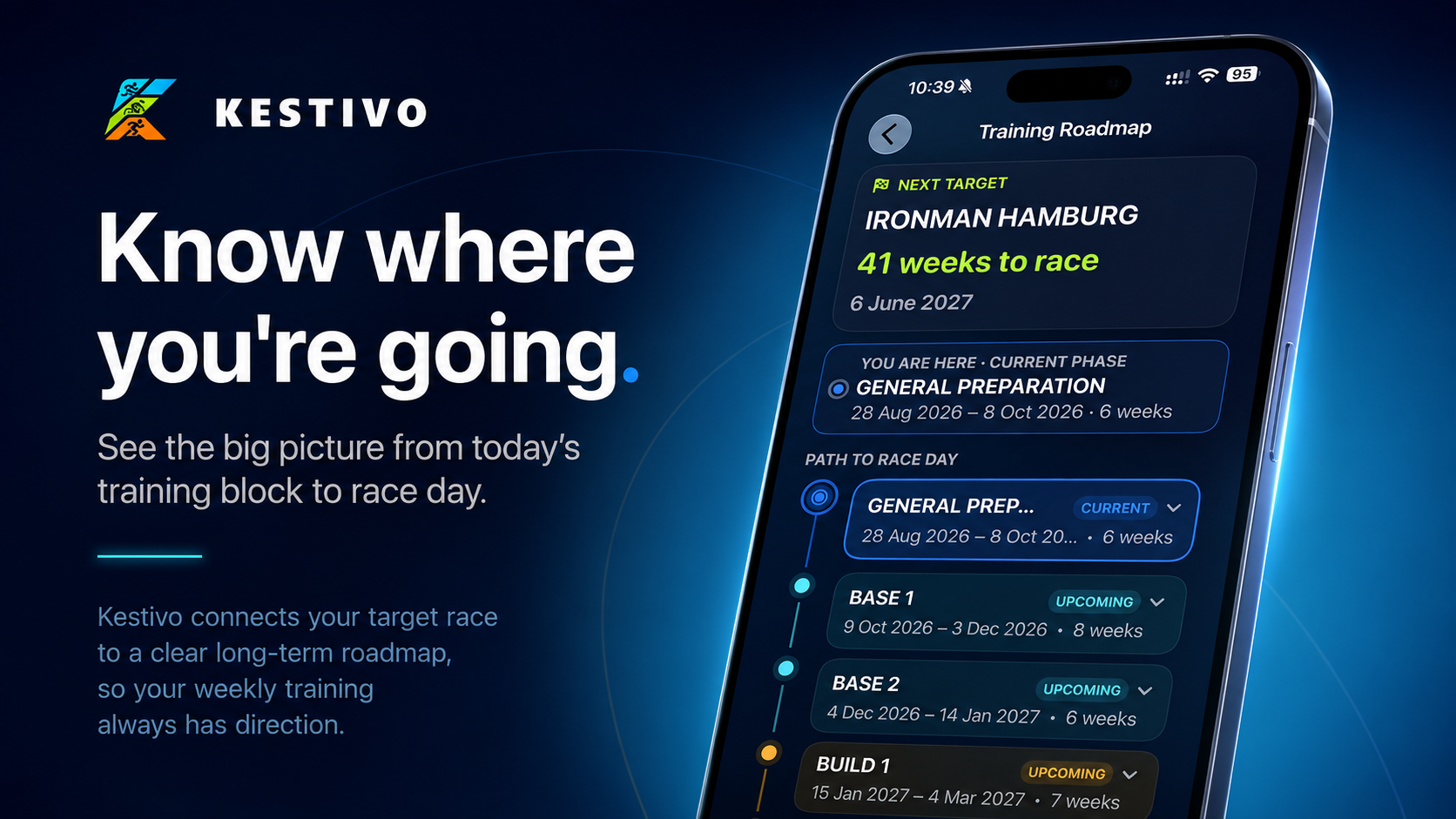
For Kestivo, the problem is not merely generating a long list of swim, bike and run sessions. It is building a race-oriented direction, proposing a realistic upcoming week, keeping planned training distinct from completed training, and letting the athlete review decisions.
Kestivo's iOS private beta supports an emerging version of that loop. It is not a substitute for medical oversight or an individual coach, and it does not silently rearrange active workouts. Availability and completed activity contribute planning context, with explicit athlete review before generated workouts are accepted.
That is particularly valuable for busy athletes because the calendar is rarely static. The goal is not an algorithm that promises perfection. It is a clearer decision when reality diverges from the original plan.
70.3 training with limited time: common questions
Can I prepare for a 70.3 on eight hours per week?
Some already-conditioned athletes can prepare with a budget in this range, depending on goals and history. It is not a guarantee of race readiness or a suitable starting point for beginners.
Should I prioritize the bike or run?
It depends on your limiter, event demands and injury risk. Bike durability is important for protecting the run, but neglecting run consistency can also create problems.
Are bricks essential every week?
No universal frequency applies. Short, purposeful bricks can be useful, especially as race day approaches, but they should fit overall recovery.
What about strength training?
Strength work can support durability, but its frequency and placement must fit available time and not compromise key endurance or recovery sessions.
Related Kestivo guides.
Make the next training week more useful.
Kestivo is an iOS private beta for selected athletes. It uses training context to propose workouts; the athlete reviews what becomes the plan. Features are still developing, and access is limited.
Selected athletes testing nowGeneral training and product information only. Training examples are illustrative, not individualized medical or coaching prescriptions. Product descriptions reflect publicly available vendor documentation as of 12 October 2026 where linked.