
The focus was making it safer to experiment with a plan, easier to understand a structured workout, and more reliable underneath.
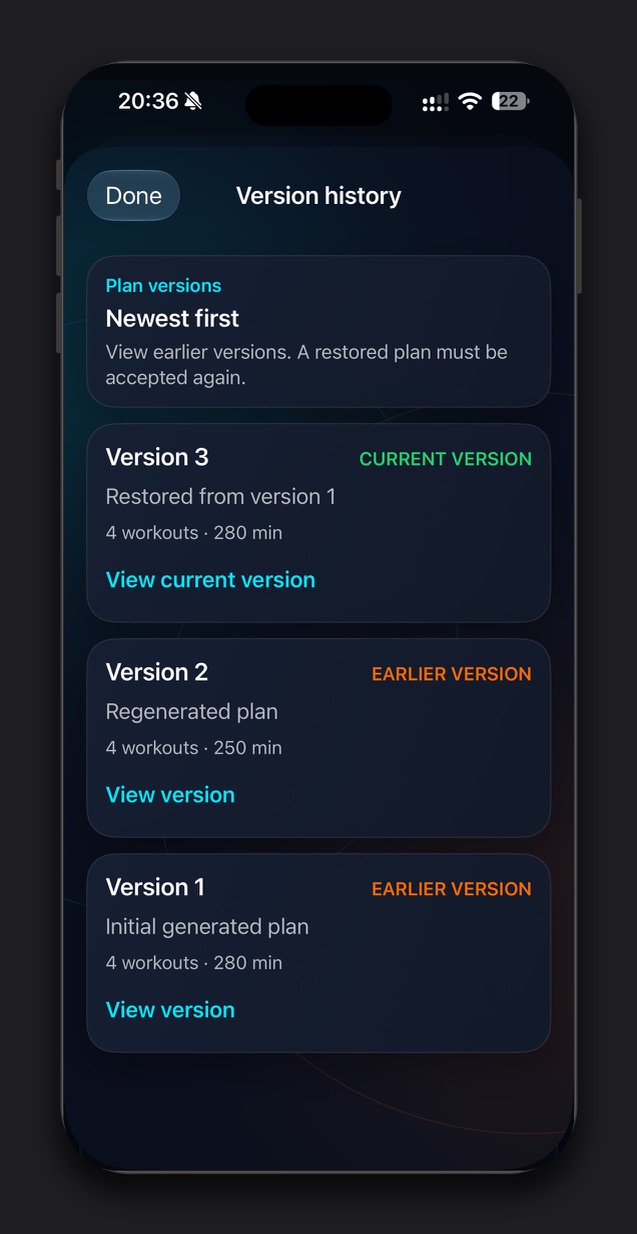
You can now go back to a plan you preferred.
Last week I showed how you can give Kestivo feedback and regenerate a training week instead of simply accepting the first proposal. There was one obvious problem with that: what if the new version is actually worse?
Kestivo now keeps previous versions of your Weekly Plan. You can review them and restore an earlier version if you preferred it.
Restoring does not make another AI request. It creates a new copy of the selected plan, which still has to be reviewed and approved before it becomes active.
Structured workouts are much easier to understand.
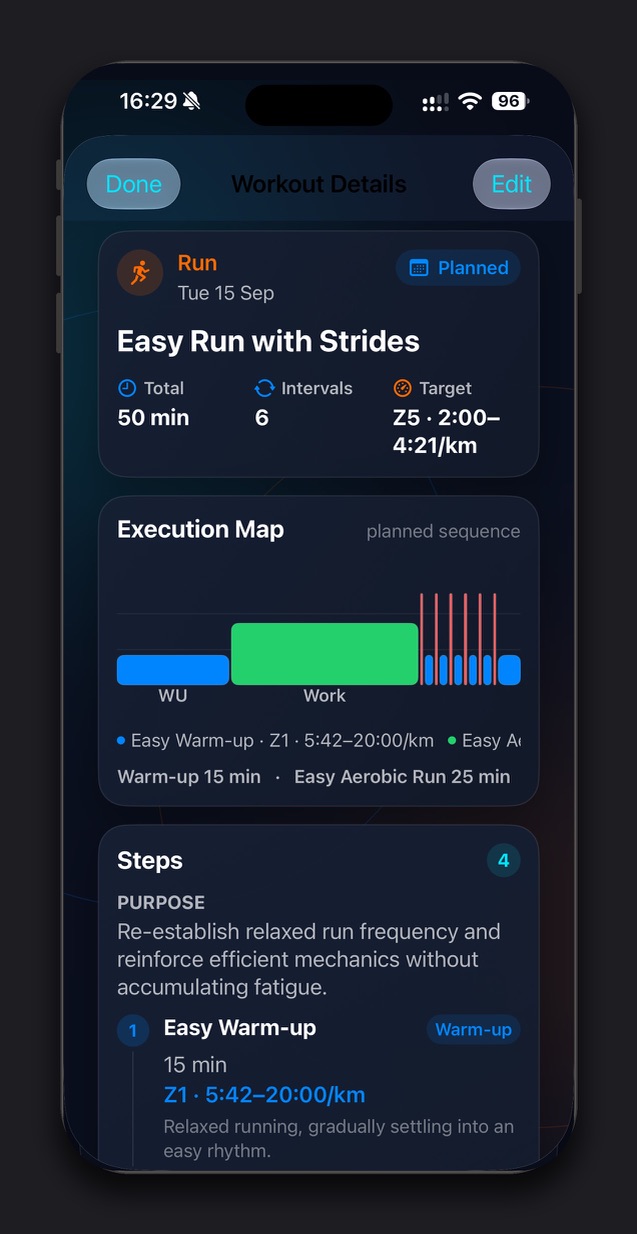
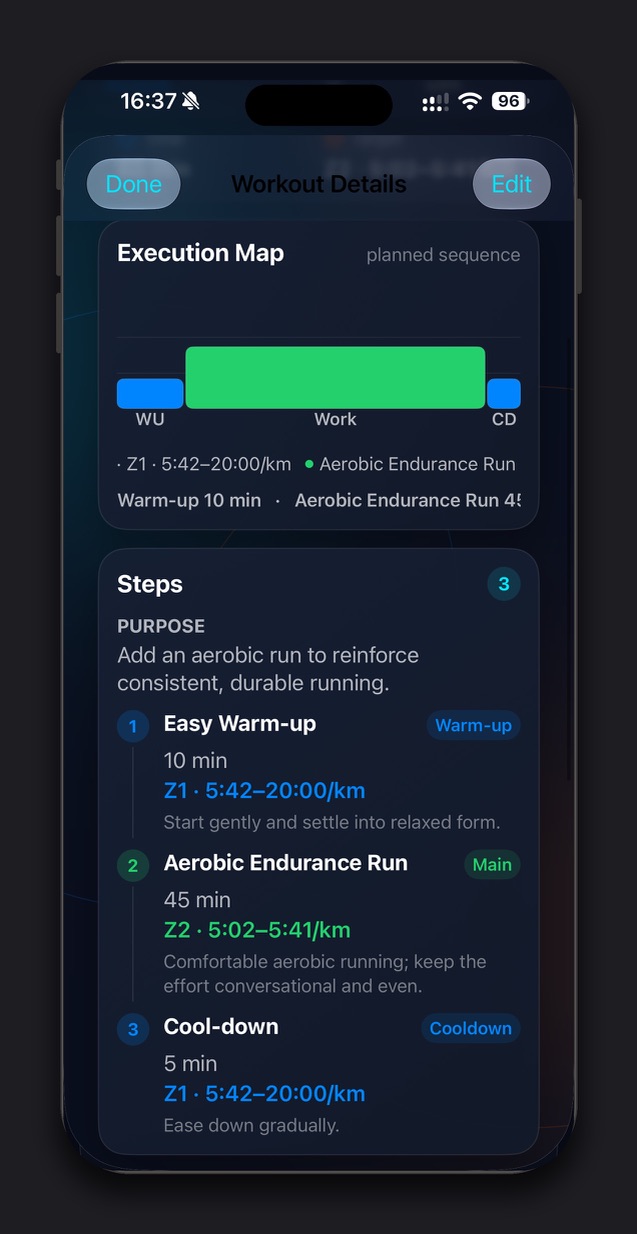
I also redesigned the Workout Detail screen this week. The biggest change is the new Execution Map. Instead of decoding a long list of interval steps, you can understand the overall structure of the workout at a glance.
Width represents duration, height represents relative prescribed intensity, colour represents the athlete's training zone, and repeated work and recovery intervals are shown individually.
The exact targets and steps are still available underneath. The map is there to make the shape of the workout obvious before you start.
Better targets for the athlete you actually are.
A lot of work also went into making workout targets more consistent. Kestivo should only prescribe cycling power when the athlete actually trains with a power meter. If power is not available, the planner needs to use another appropriate target instead of pretending it is.
The same principle now applies more consistently across warm-ups, main sets, recoveries and cool-downs for Bike and Run workouts.
Once a workout is approved, its prescription also remains a historical snapshot. If your zones change later, that should affect future workouts rather than silently rewriting something you already accepted.
The boring but important part.
Quite a lot happened underneath the interface too. Weekly Plan regeneration is now more resilient when a request is slow or fails, and Kestivo preserves the current good plan instead of replacing it with an uncertain result.
I also removed a large amount of unnecessary AI request overhead, fixed completion-state edge cases, and tightened the separation between the original planned workout and what actually happened.
Most of this should be invisible to the athlete. Which is exactly the point.
Finish the prescription edge cases, then keep moving.
I mentioned Garmin workout delivery last week. It is still very much on the list.
While hardening the structured prescription, I found a few edge cases that I want to solve properly first. I would rather delay Garmin delivery slightly than send a beautifully structured workout to a device with the wrong training meaning behind it.
The revamped Dashboard is also still planned, with a much simpler focus on what matters to the athlete right now instead of exposing too much training-engine terminology.
AI-first endurance coaching for athletes who still want control.
Want the next Kestivo Weekly in your inbox?
Join the private beta waitlist for development updates and future beta access invitations.